

The bus is just the start
You may have read my piece on how the 71 bus becomes a bit of a micro-community. The truth is, I love people watching and the bus offers a front row seat (sometimes, quite literally) into people’s lives. The other day I saw a woman bringing her cat home from a doctor’s visit in a box, along with a bag of toys and treats from the pet store.
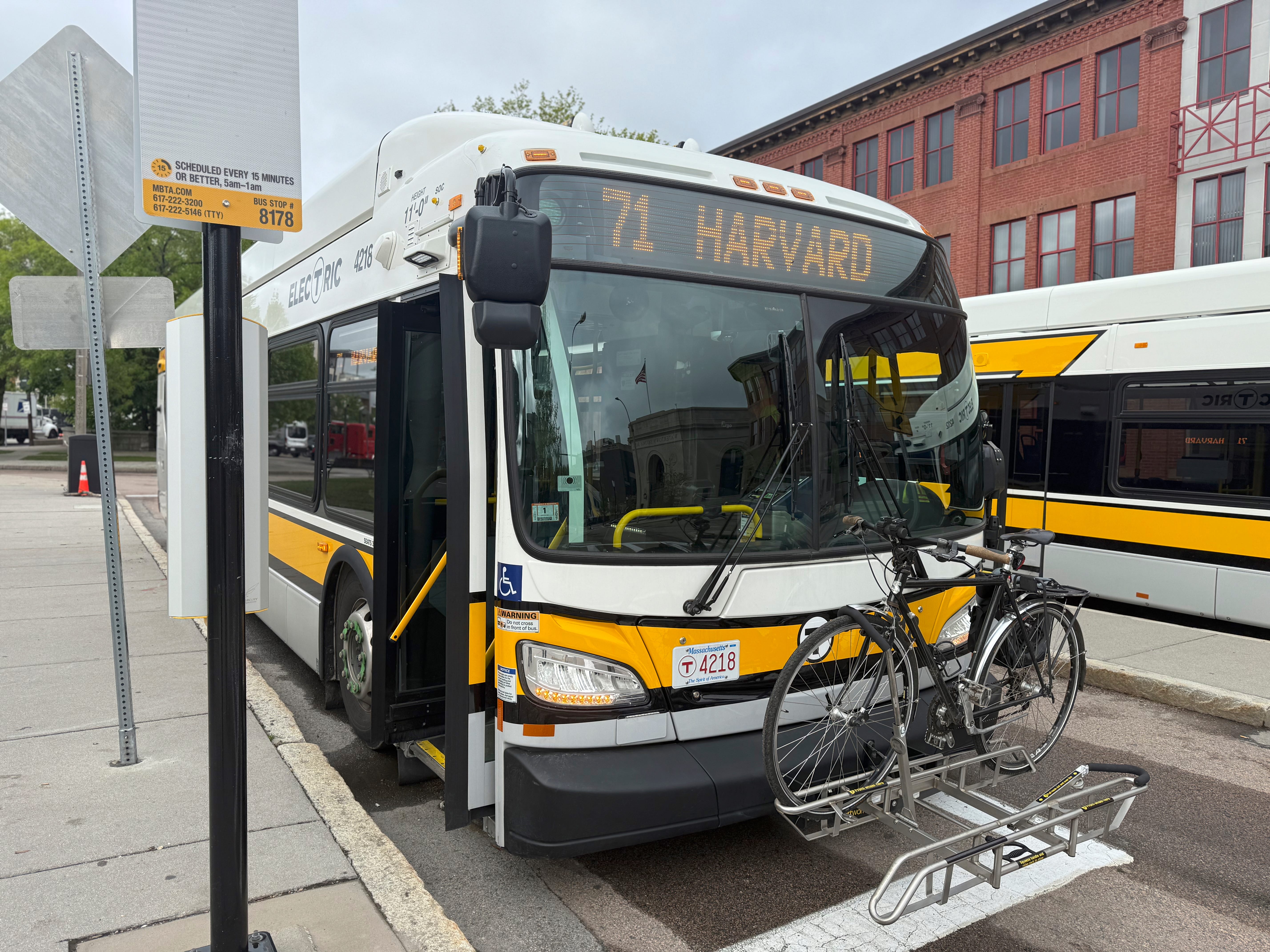
But the thing about the bus, or any public transportation, is that it only works if you live along the routes. This is hard when you’re in a more suburban environment like Newton, which is dominated by moto-normative thinking. It’s also difficult in a city where housing on transportation routes is out of reach for most people.
We live right on the 556, but that only connects Newton Corner and Waltham Common and it only does that during commuting times. If you want to ride the system any other time, you’re out of luck. And if you’re trying to go to Cambridge, well, you’ll need to change to two other buses. First, you get on the 556 and get off about a half mile later to jump on the 59, then you have to change to the 71. You could walk to the 59 and take that to the 71, but you’re still betting on bus timing, and the 59 runs every 30 minutes.
The best option is to ride your bike the two miles to Watertown Square and then put it on the bus. The catch is, no app will ever tell you this method. You could use Transit, Google Maps or even the MBTA Go app and they’ll all give you a single mode option. You can drive, or you can take public transportation (bus to the bus), or you can bike. But combining them is something you need to just know how to do. Though, Google Maps now shows cyclists what type of bike infrastructure exists on their route, which is a step in the right direction.
At a networking event, I happened to speak with someone who is working with the MBTA tech team, and he suggested that one of the main issues with the bike/ public transit combo is an individual’s risk tolerance. They can’t predict if a person would be willing to ride on certain streets to get to the right bus stop.
That sounds like a solvable problem, we just need the right bike infrastructure. If the rides were on protected lanes, then risk tolerance would be a non-issue.


I spent a couple of days biking around Montreal recently and the biking culture there is pretty solid. During commute hours the bike lanes backed up at lights, but bike traffic never really slowed. Moving through the city by bike proved very easy, and there were place to lock up your bike on every block, something we lack here. Some were even quite original.
Getting from here to there isn’t complicated and isn’t about a new way of thinking. We just have to want it.
Or, if there space on the bus bike rack. You also have to learn how to use the bus bike rack, and I don’t feel like they’d give you the time to figure it out.